
This blog is part of a series featuring the 2026 YPG Mentorship Programme participants and their valuable learnings in the field of solid waste management and the circular economy.
Mentee: Anusree Nalladiyil
Mentor: Zoe Lenkiewicz
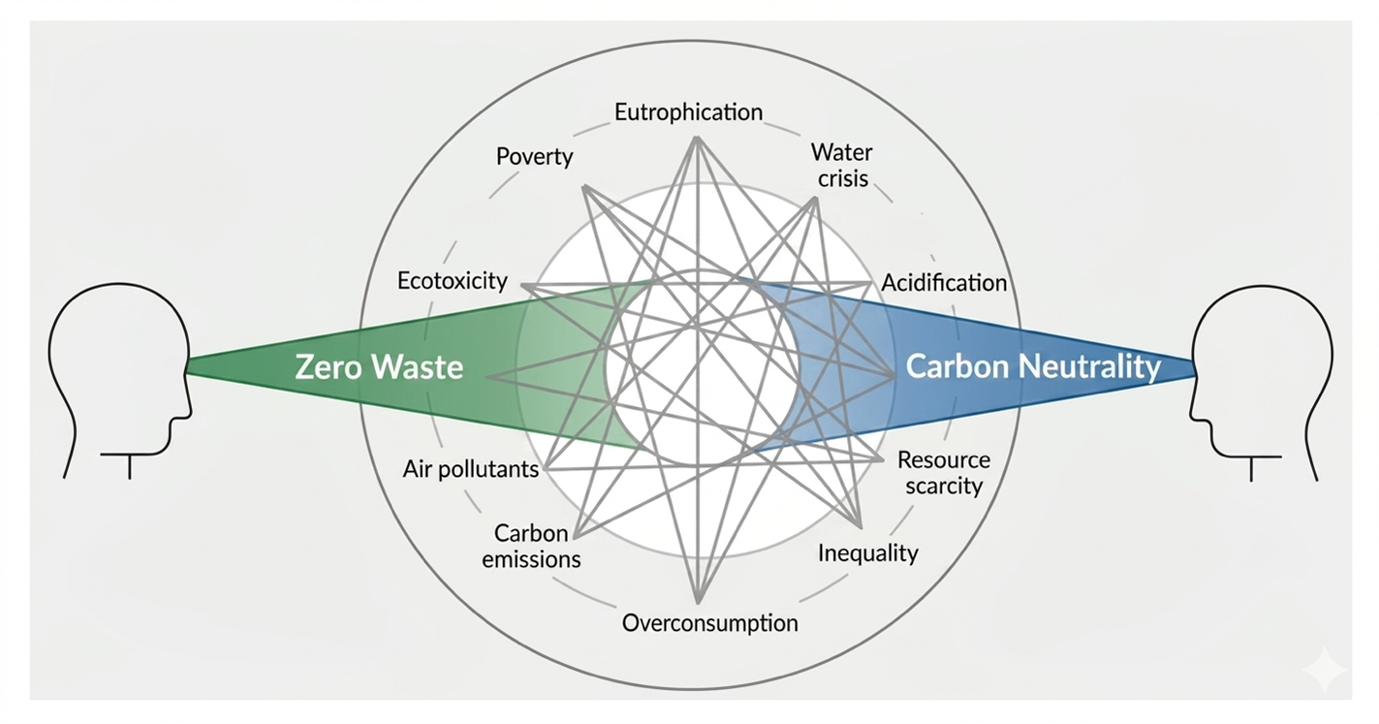
Cities across the world are racing to become more sustainable. Two popular goals dominate policy discussions: Zero Waste and Carbon Neutrality. Both are important. Both promise environmental benefits. Yet, when pursued in isolation, they can create unintended consequences that cities often fail to measure.
The real question is not whether cities should pursue zero waste or carbon neutrality, but whether focusing on one metric at the expense of the other leads to flawed decisions.
Understanding the Two Visions
Zero Waste focuses on preventing waste and diverting materials away from landfills and incinerators. The goal is ambitious: divert more than 90% of waste from landfill through reduction, reuse, recycling, and composting, creating a closed-loop system where materials remain in circulation. In theory, waste becomes a resource rather than something to discard.
While carbon neutrality focuses on balancing greenhouse gas emissions with their removal or offsetting. Achieving carbon neutrality typically involves reducing emissions from energy use, improving efficiency, transitioning to renewable energy sources and optimising supply chains.
Both frameworks address the climate crisis, but they measure success in very different ways, and that difference matters.
When Zero Waste Ignores Carbon
The Zero Waste framework largely measures material diversion, and not environmental impact.
For example, in Bengaluru, the city corporation transports waste to large processing facilities located 40–50 km outside urban areas based on a field study. While diversion statistics may improve, the transport emissions associated with hauling recyclables long distances are rarely counted.
In some cases, transporting low-value recyclables over long distances can even negate the environmental benefit of recycling itself. For example, in some cities, the long-distance transport of glass for recycling results in carbon emissions that outweigh the environmental gains.
Another overlooked issue is poor segregation at the household level. When waste streams are contaminated, recycling facilities must use energy-intensive sorting, washing, and processing technologies to recover usable materials. These additional energy inputs increase the carbon footprint of recycling. Without renewable energy or technological improvements, recycling alone cannot guarantee environmental benefits.
As a result, diversion metrics can mislead policymakers. They reward movement of materials rather than actual reduction in environmental impact.
When Carbon Neutrality Ignores Waste
Carbon neutrality frameworks have their own blind spots. Many organisations and cities focus heavily on reducing operational emissions while ignoring Scope 3 emissions, which include emissions from waste generation, product lifecycles, and supply chains.
This can lead to decisions that reduce carbon per unit but increase material waste.
For example, companies may replace reusable packaging with lighter single-use materials to reduce transport emissions. Switching from reusable glass bottles to single-use plastics can lower transportation-related carbon emissions but dramatically increase plastic waste.
Similarly, carbon neutrality strategies often promote bio-based materials, such as biodegradable plastics. While these materials sound sustainable, many require industrial composting infrastructure and can interfere with the recycling of traditional oil-based plastics. If appropriate processing systems are absent, these products often end up in landfills.
Another challenge is carbon offsetting. Instead of reducing waste generation, organisations may invest in tree-planting projects to offset emissions. While offsets have value, they do not address wasteful production systems that continue generating large volumes of discarded materials.
When carbon reduction is pursued without considering circularity, cities may unintentionally reinforce linear material systems.
The challenge, therefore, is not choosing between zero waste and carbon neutrality but designing systems that address both simultaneously.
Towards Low-Carbon Circular Cities
Instead of optimising a single metric, cities need integrated approaches that balance both material circularity and climate impact.
This begins with source reduction, preventing waste before it is created. Policies that encourage reuse systems, refillable packaging, and durable products can dramatically reduce both waste generation and emissions.
Cities should also promote circular economy models in which the by-products of one industry become inputs for another. Industrial symbiosis can reduce resource extraction while minimising waste. For example, a food manufacturing business generating organic waste could supply it as feedstock for a biogas plant that generates low-carbon renewable energy, thus serving both goals.
Investment in advanced waste infrastructure, including AI-driven sorting systems and modern composting technologies, can further improve recovery efficiency while reducing energy consumption.
| Zero Waste | Carbon Neutrality | |
| Concept | Maximise material recovery and minimise landfill/incineration | Minimise climate impact by reducing GHG emissions |
| Objective | Waste diversion rate (%) | Carbon footprint (CO₂-eq. emissions) |
| Key metric | Material flows (circular economy) | Energy flows and emissions accounting |
| System focus |
Reduces landfill dependency Promotes circular economy Encourages resource efficiency |
Directly addresses climate change Encourages energy transition. Improves efficiency across sectors |
| Strengths | Ignores embedded emissions (transport, processing energy) | Ignores material circularity and waste generation |
| Major Blind Spot | High recycling rates may increase emissions due to transport and processing | Low-carbon choices may increase waste (e.g., single-use lightweight materials) |
| Sustainability Limitation | Can promote energy-intensive recycling systems | Can reinforce linear consumption patterns |
Rethinking How Cities Measure Success
Perhaps the most important change cities need is a shift in how success is measured.
Current systems reward waste managed, not waste avoided. Yet reducing per capita waste generation is often far more impactful than improving downstream treatment.
Achieving perfect zero waste or complete carbon neutrality may be unrealistic. But cities can aim for something more meaningful: low carbon systems with maximum material circularity.
True sustainability lies in designing measurement frameworks that capture both climate impacts and material flows, allowing cities to make informed, context-sensitive decisions. Achieving it will require collaboration between governments, businesses, and citizens to move toward a truly circular, low-carbon future.