
Lea Zamuner
ISWA Technical Communications Coordinator
Abhimanyu Chakravorty
ISWA Technical Communications Coordinator
Circularity is no longer just an economic or a materials issue for the European Union; it is a security imperative. Without material sovereignty, Europe cannot build resilience. To be resilient, in this context, means securing a sustainable supply of secondary raw materials from waste as feedstock through advanced sorting and separation technologies for recycling and upcycling solutions. This will help to reduce emissions linked with virgin materials extraction and production and meet the EU’s circular economy targets. In plastics, for example, plenty of Research and Development is going towards exploring alternate materials to reduce reliance on virgin plastics and increase the use of recycled material in products.
This R&D push is driven in part by historical figures and binding regulations. According to the European Environment Agency (EEA), only an estimated 9% of all plastics ever produced globally have been recycled, while 12% have been incinerated. To address this issue, the EU Directive 2018/852 on packaging and packaging waste set a target that by 2025, at least 65% by weight of all packaging waste must be recycled. By 2030, this target increases to 70%. The Plastic Packaging and Waste Regulation (PPWR) builds on the Directive (EU) 2018/852 and states that plastic packaging must include recycled content at different levels depending on different packaging applications, with increasing targets for 2030 and 2040. Also, the Ecodesign requirements for sustainable products regulation – one of the key pillars of the European Green Deal- entails increasing the use of recycled content to improve the environmental sustainability of products placed on the European market.
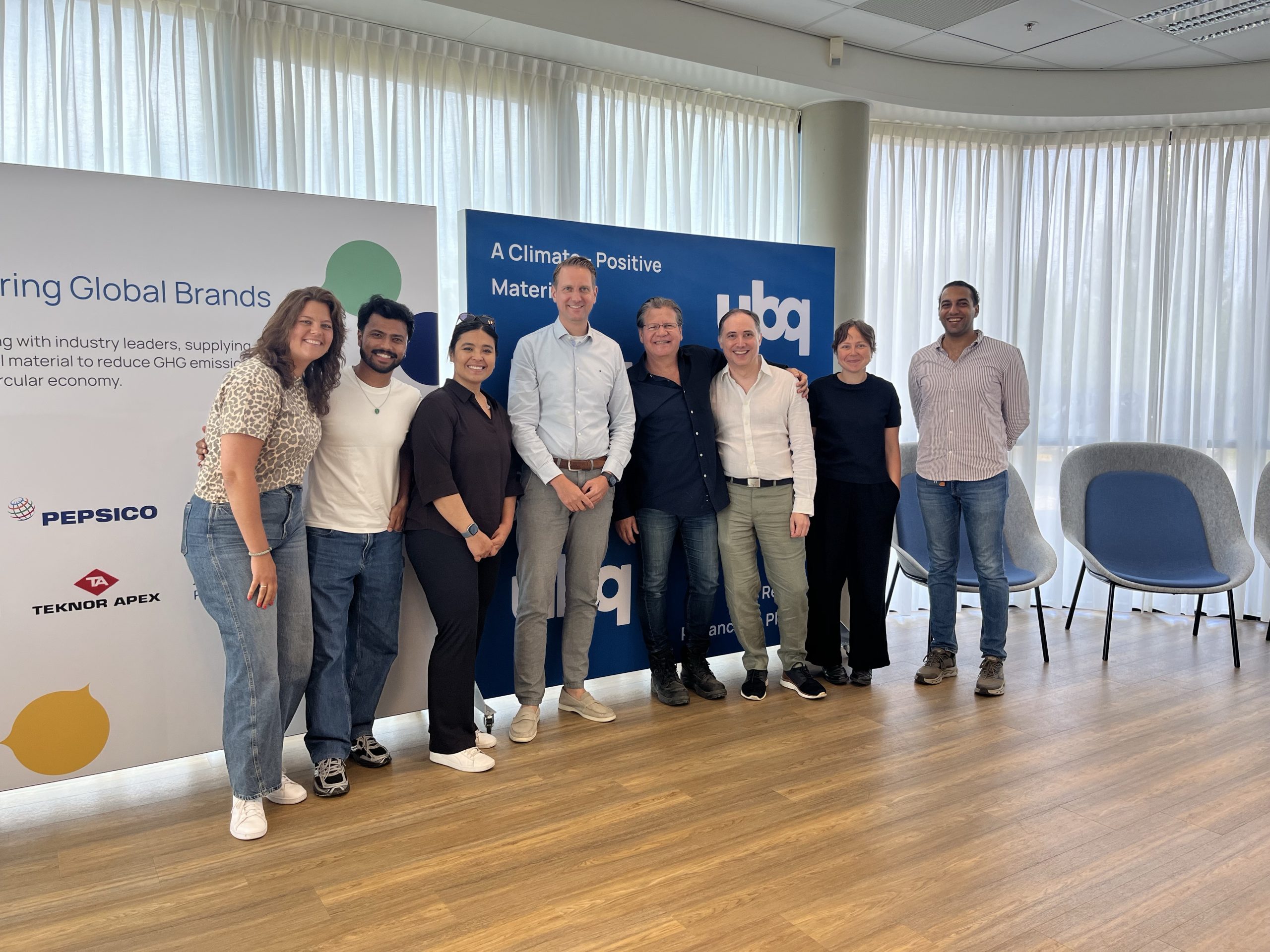
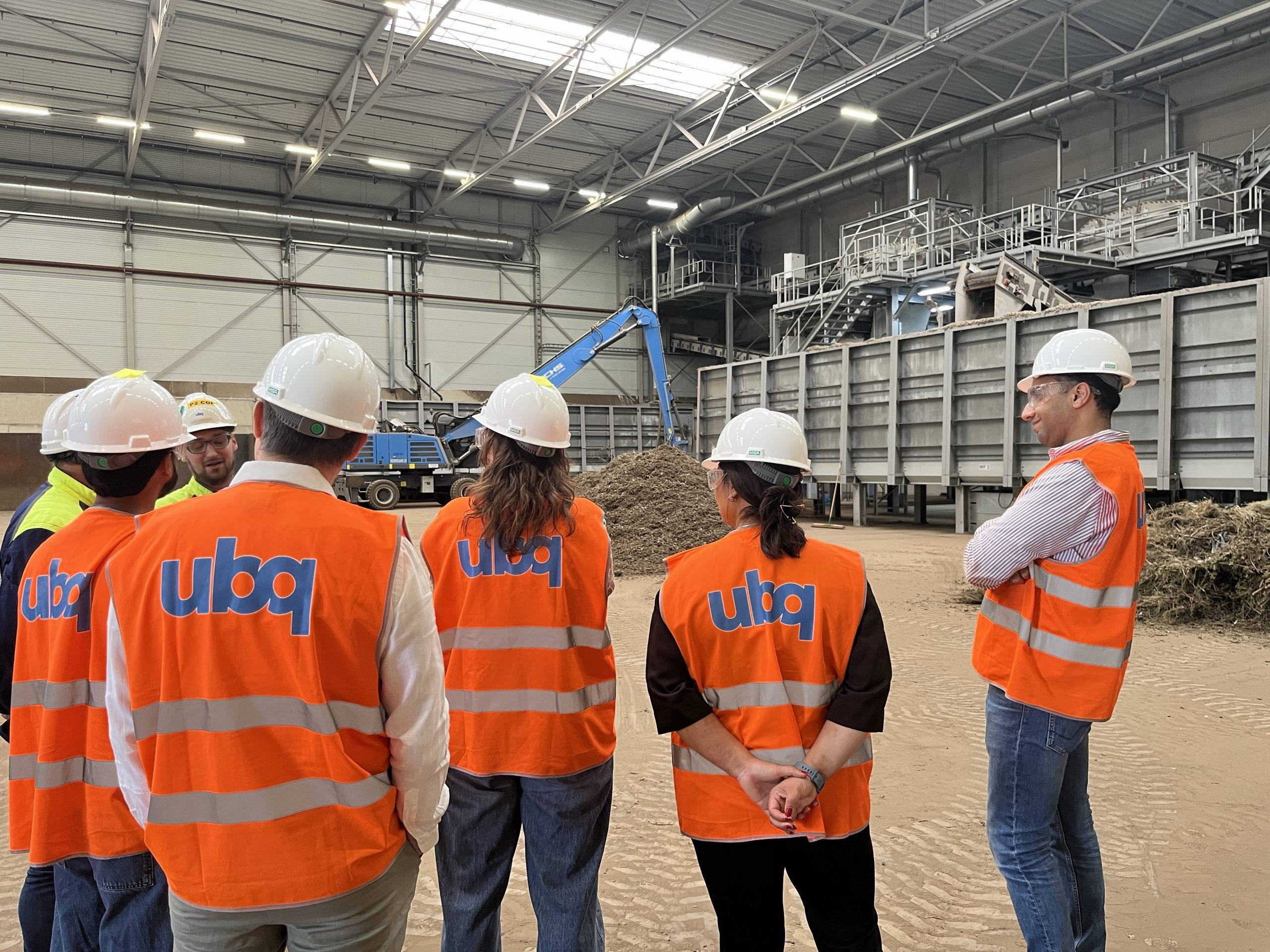
Against this backdrop, UBQ’s process becomes a useful test case. On July 16th, ISWA was invited by UBQ to visit their facilities, in Bergen op Zoom, The Netherlands. Self-proclaimed as an industry that uses residual waste, and not a waste management organisation, UBQ developed a product with around 80% of organic content that presents a solid alternative to transition away from plastics. By using non-recyclable and residual waste streams, the organisation helps divert waste from incineration and landfills, supporting greater recycling and material recovery.
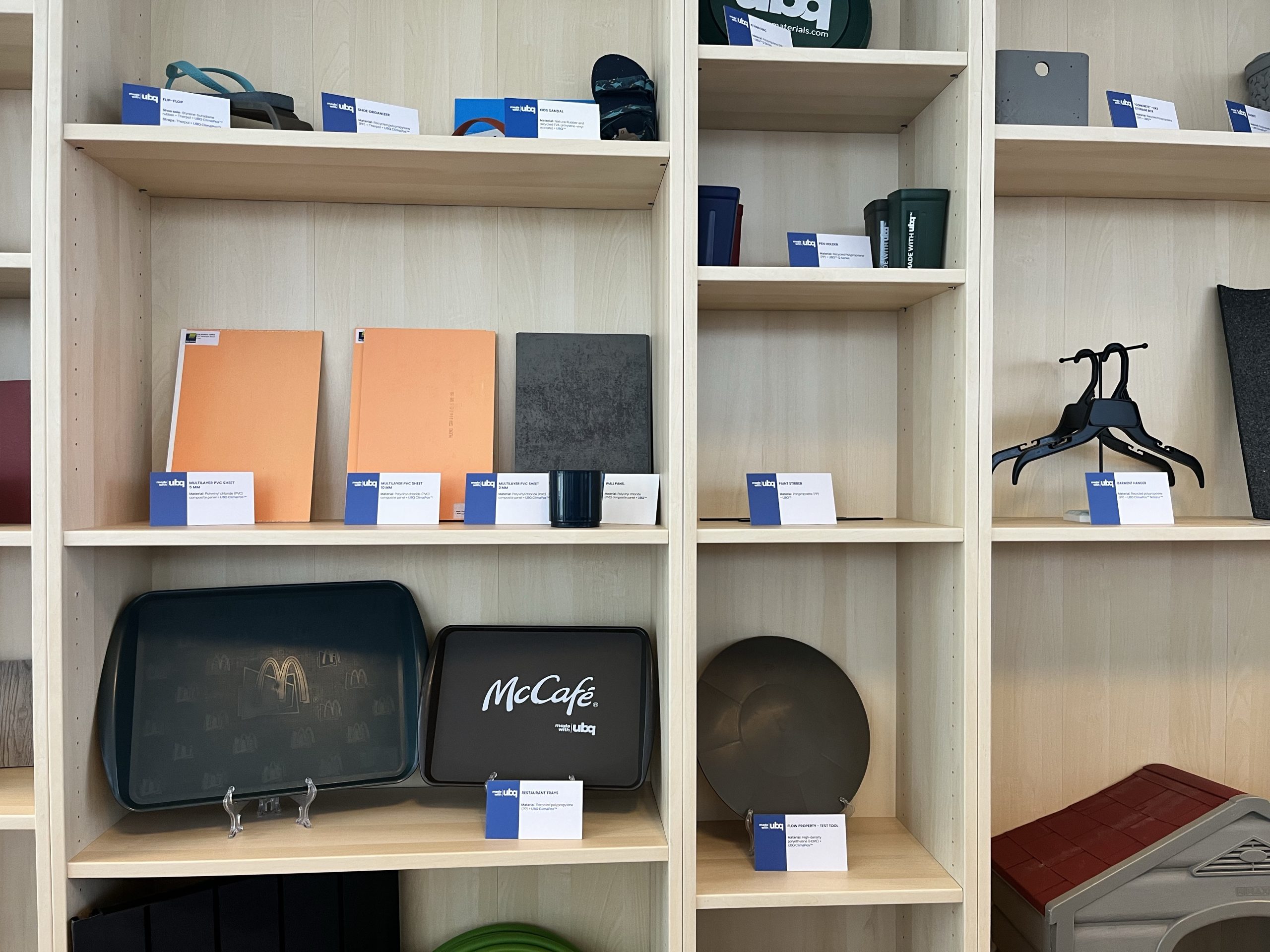
Their product, also called UBQ, is a composite material similar to PVC and made out of around 80 % organic, cardboard, textile, and otherwise hard to recycle plastic waste, combined with 20% plastic, to enhance the functionality, mechanical properties of the material and allow for it not to degrade over time.
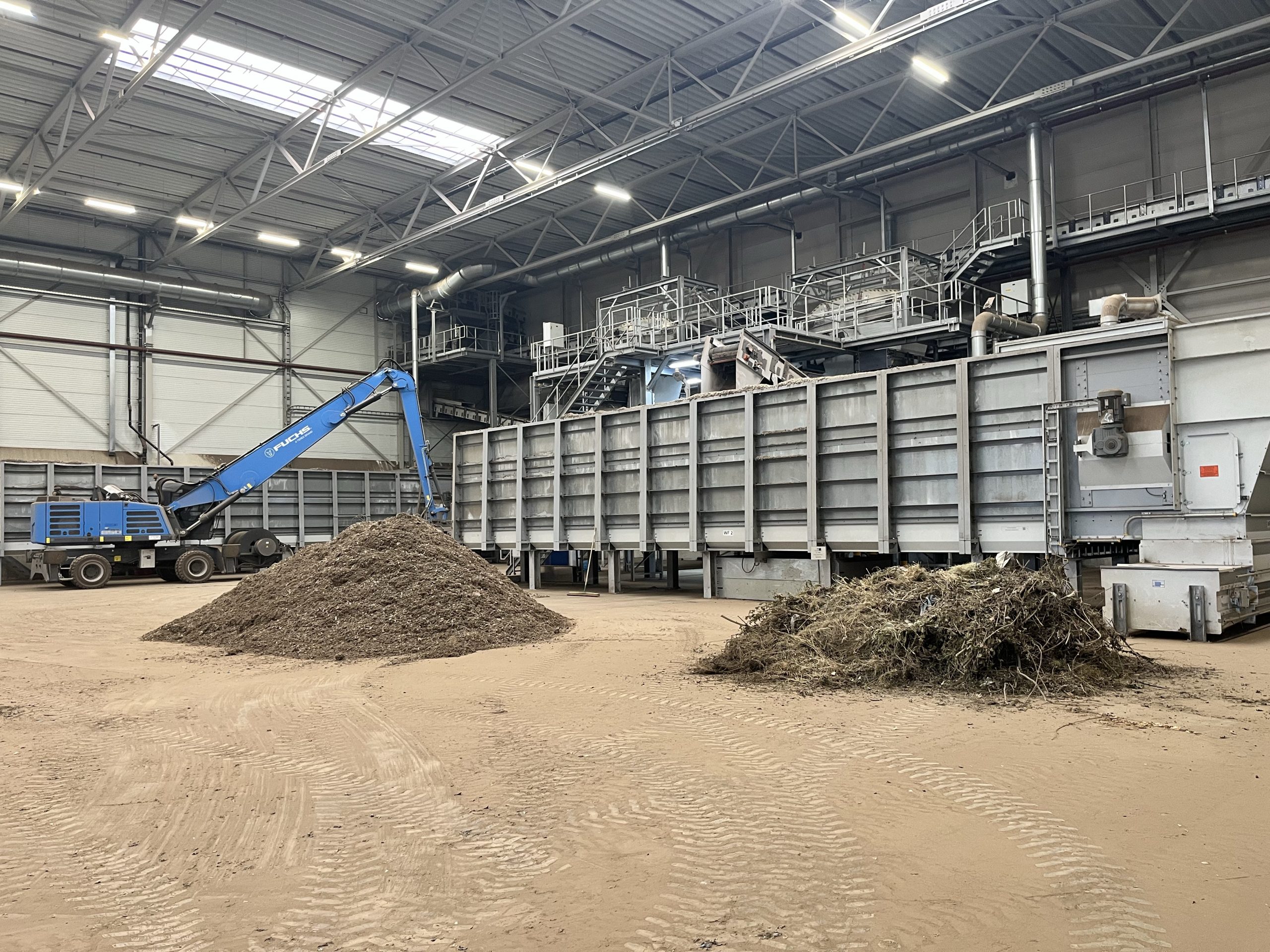
In the words of the facility manager, following the sorting stage, the production process focuses on transforming the recovered waste into a stable composite material. Moisture is reduced from around 25% to 10%, while both ferrous and non-ferrous metals are removed through a combination of heating, density separation using destoning tables, and infrared sorting. The resulting material can be produced as powder, pellets, or chunks and is suitable for use on its own or blended with conventional polymers such as polypropylene and polyethylene. The process, including final quality analysis, is almost entirely automated, reducing production time and ensuring consistent material quality.
One of the main engineering challenges in the process was eliminating odors from both the facility and the final product. This was addressed through a combination of moisture removal during processing and the use of biofilters, resulting in a material suitable for industrial applications.
According to UBQ,
“The material offers several advantages. As its feedstock is residual waste rather than oil and gas, it is around 50% cheaper than virgin plastics while providing a lifespan of approximately 35 years. The carbon footprint is –1.02 kg CO₂e per kilogram of material and the avoided emissions –2.16 kg CO₂e compared with conventional plastics, reflecting the emissions avoided from fossil fuel extraction and processing.”
The process nevertheless faces some limitations. The pre-processed waste currently used as feedstock is sourced mainly from France and Germany, to meet quality requirements, although the long-term objective is to source and process waste locally in the Netherlands. Furthermore, adoption remains constrained by existing plastic manufacturing infrastructure. As most production lines and molds are designed for virgin plastics, manufacturers can currently incorporate a limited percentage of UBQ material into their products.
UBQ illustrates both the opportunities and the complexities of building a circular economy around residual waste. While challenges remain in scaling production and integrating alternative materials into existing manufacturing systems, initiatives like this demonstrate how waste can become a strategic resource. Such innovations highlight the role that advanced recycling and material recovery can play in supporting a more resilient and circular economy.