
João Portela
CEO Sotkon
With more than 30 years of experience, Sotkon Group develops, manufactures, and sells underground containers for urban waste, recognised for safety, durability, and design. Present in over 20 countries across 4 continents, Sotkon’s solutions integrate advanced technologies to improve waste separation, boost recycling rates, and enhance urban living. Dedicated to reliability and innovation, Sotkon is shaping smarter, cleaner cities.
In today’s public administration landscape, municipal solid waste (MSW) management has evolved from an invisible logistical task into a critical pillar of any local authority’s political and environmental strategy. It is therefore increasingly urgent to modernise the waste sector through a structural transition: abandoning rigid, reactive models in favour of an operational intelligence model driven by the Circular Economy.
Why modernise now?
The urgency of this modernisation is currently driven by pressure on three fronts.
Regulatory Compliance and EU Targets: The European legislative framework mandates an increase in preparation for reuse and recycling of MSW to a minimum of 60% by weight by 2030, while limiting landfill disposal to just 10% by 2035. These targets also require the mandatory separate collection of bio-waste and imply a transition toward fairer tariff structures, such as PAYT (“Pay As You Throw”) systems.
Unviability of the Traditional Operational Model: The lack of qualified labour, combined with rising urbanisation and waste production, clashes with obsolete infrastructure and collection fleets operating on fixed routes that are financially and logistically inefficient. Modernising municipalities with high-capacity deposition systems and monitoring them intelligently reduces long-term costs and optimises operational efficiency.
The Rise of the “Citizen-User”: Residents now hold higher standards of expectation. Tolerance for insufficient container capacity, unpleasant odours, or inaccessible equipment is lower than ever. Citizens demand systems with improved capacity and ease of use, seamlessly integrated into the public space, and, above all, backed by transparency – where technology simplifies sorting and provides access to information regarding waste treatment processes and cost billing.
The Four Pillars of Waste Management
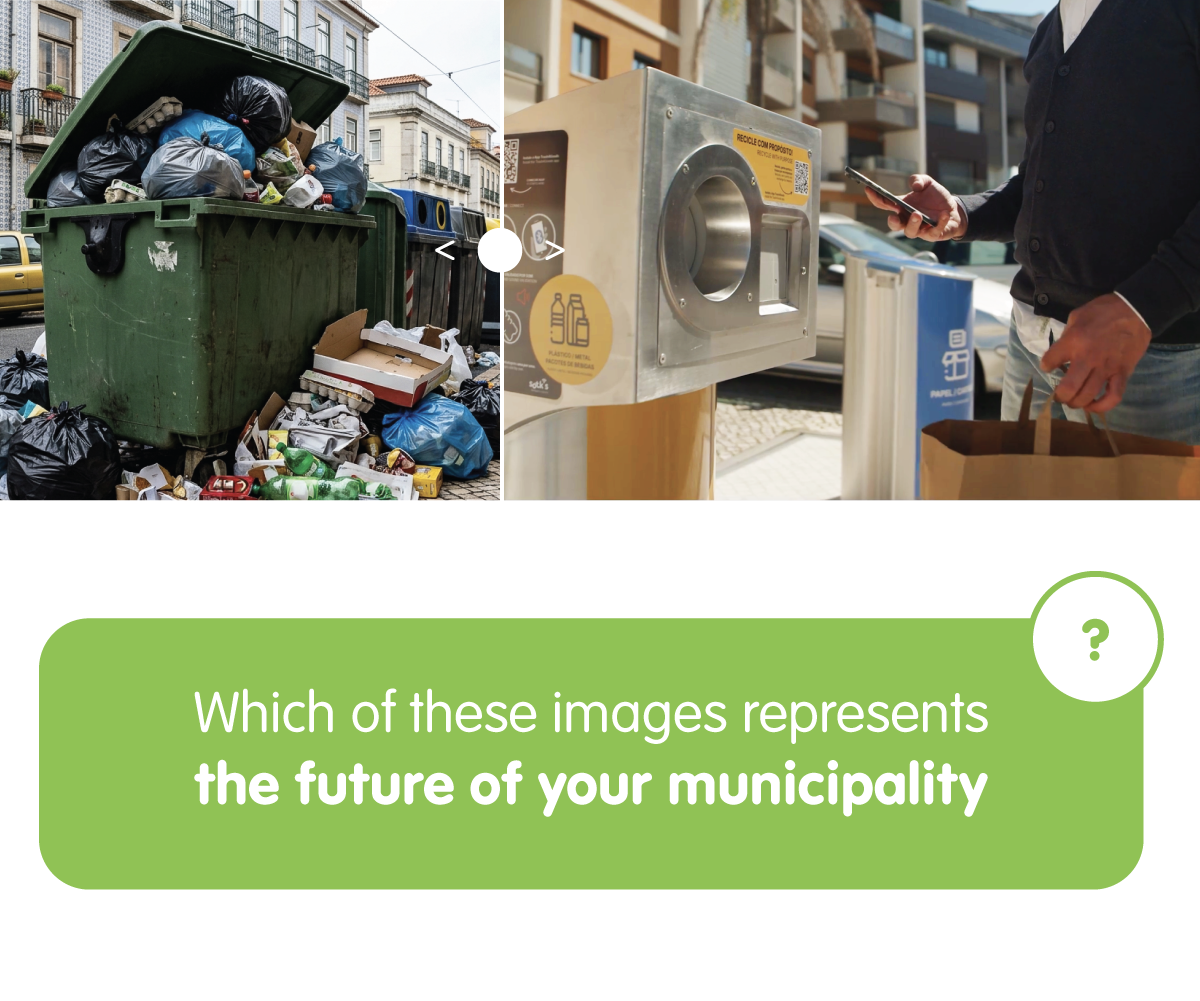
An outdated waste management model shows highly visible signs, such as constantly overflowing containers, dirty public streets, and ineffective collection logistics despite increasing financial resources.
When waste management remains purely reactive, the municipality loses both efficiency and resources.
At the other end of the scale are the countries leading the way in recycling targets in Europe, such as Germany and Austria, where the solution for waste disposal has been to opt for underground systems, which offer greater capacity and hygiene, especially given the exponential growth of modern urban areas in these countries, while surface systems remain the norm in rural areas.
The first pillar of more efficient waste management is investment in more efficient and integrated infrastructure. Modernisation begins with equipment that offers a better return on investment (ROI).
A municipality’s economic efficiency also depends directly on reducing operating costs, meaning that optimising collection operations will be the second pillar of waste management modernisation. Collection frequency decreases dramatically when infrastructure with high waste storage capacity is in place. At the same time, intelligent waste management systems allow for continuous monitoring of container fill levels, creating adaptive collection routes through level sensors.
All of this contributes to fewer unnecessary routes, resulting in lower fuel consumption, reduced fleet wear and tear, and a decrease in labour requirements in the medium and long term. This facilitates the transition from heavy logistics to an efficient operation with low environmental impact.
Modernisation thus also requires management based on actual needs, which makes intelligent waste management systems an excellent third pillar. Through smart platforms, municipal managers can gain a holistic view of the entire waste disposal and collection operation and, consequently, make decisions supported by concrete data. The ability to access and manage waste management data in real time is what makes it possible to optimise the efficiency of allocated resources and increase operational profitability—ensuring that resources are applied only where they are strictly necessary.
However, in addition to all those already mentioned, it is important to add a fourth pillar: citizen engagement. The success of the circular economy effectively depends on citizen participation. Technology also acts as a facilitator in this regard to ensure data transparency and citizen engagement through rewards/benefits (SAYT – “Save as You Throw” or RAYT – “Reward as You Throw”); the municipality not only improves the experience for all stakeholders but also can improve recycling rates and waste quality.
Furthermore, the data collected at the disposal points can—and should—also be used to make awareness and educational campaigns much more effective and targeted.
Is Your Municipality Ready for the Challenges of 2030?
Waste management modernization cannot be a process of trial and error, especially when public budgets and strict environmental goals are at stake.
Explore the complete article and gain access to our Municipal Modernisation Plan and Waste Management Maturity Assessment – two practical tools designed to support smarter and more sustainable waste management decisions.