This blog is part of a series featuring the 2026 YPG Mentorship Programme participants and their valuable learnings in the field of solid waste management and the circular economy.
Mentee: Dr. Kanlanféi Sambiani
Mentor: Susan Kone
The influencing factors on waste generation
Over the decades, waste management has posed several environmental pollution and human health risks. To understand and overcome such issues, the estimation of waste generation is often based solely on the population’s growth rate. Waste facilities lack proper system design, which often results in an underestimation of their capacity and project failure. The success of projects depends on effective waste stream flow control. Its generation trend is strongly affected by human activities and environmental factors.
Socio-economic factors
Household and institutional electricity consumption is one of the most influential factors in monthly waste generation. This is illustrated by the permanent socio-economic ecosystem transformation through Human activities in areas such as agriculture, industry, transportation, energy, etc. Such human activities are by nature dynamic and affect waste stream flow and its composition.
Climatic factors
Among the climatic features, humidity and temperature affect the waste generation trend more and play an important role in human living conditions and the environment. They are the season variability indicators, which reflect the seasonal variation in waste generation in terms of materials weight proportion and physicochemical properties.
Land use and land cover factors
The occurrences in land use and land cover, primarily seen as consequences of human activities for agricultural and urbanisation needs, have been shown to affect waste generation. Specifically, the proportion of vegetation, water bodies, built area, and bare land in a given area indicates the level of human footprint, which results in waste generation. Therefore, any variability in these features leads to waste generation variation.
Conclusion
Waste generation trend follows the occurring changes observed in the socio-economic, climatic, and land use and land cover factors in a given area. However, waste generation trend is predominantly driven by the socio-economic factors, followed by the climatic, and the land use and land cover factors. Therefore, like human behavior, waste generation is dynamic, and its estimation is still hard to predict. A good track and approximation of waste generation should consider such phenomena for better waste facilities design and management practices.
How does an illegal dumpsite impact our ecosystem?
In most countries, the collection services of municipal solid waste (MSW) are provided by non-governmental organisations (NGOs), associations, and private companies, through the system of pre-collection and collection to landfills. However, the lack of logistics, road networks, non-structured residential buildings, land availability, cost of waste collection and siting facilities has led to inefficient MSW management across cities, especially in Lomé.
Air pollution
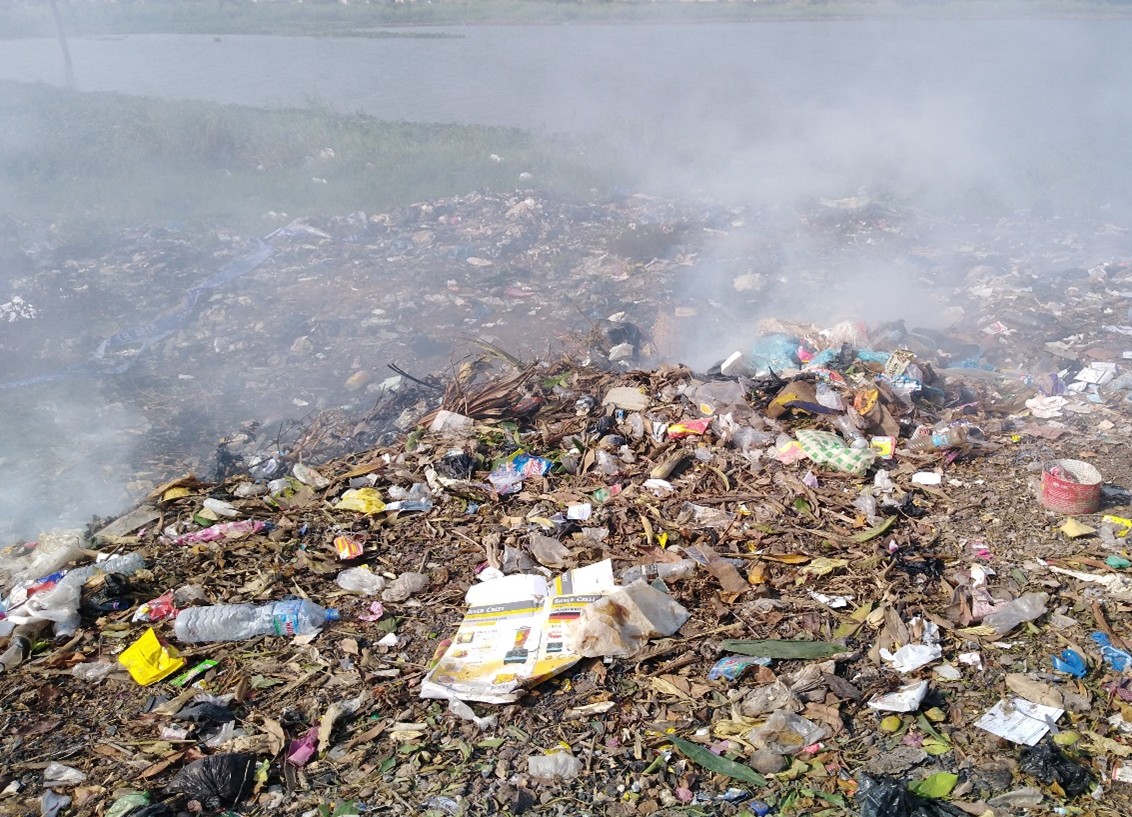
The open-air burning practices of MSW are widely seen at illegal dumpsites and from households lacking waste facilities. This results in pollutant emissions such as dioxins and furans, and harms human health and the ecology. As reported by the World Health Organisation (WHO) in 2025, roughly 270,000 deaths were attributable to pollutants from waste-burning activities. Air pollution from waste affects neurological development, the immune system, lung and thyroid function, hormone production and development, and many other organs, as indicated in the WHO report. Children are particularly vulnerable to such health risks, with the development of chronic diseases such as diabetes and cancer.
Soil pollution
Inappropriate waste dumping leads to land degradation and biodiversity loss. Waste materials are composed of chemicals and heavy metals, which are harmful to human health through contaminated consumption patterns. This is proven by the destruction of soil ecosystem services, for instance, in the food chain supply. It constitutes a barrier for reaching the Sustainable Development Goals (SDGs), especially SDG 1 (poverty elimination), SDG 2 (zero hunger), and SDG 3 (good health and well-being).
Surface and ground water pollution
Dwellers living around illegal dumpsites might also face health risks and environmental pollution issues from waterbody and groundwater contamination, leading to diseases (e.g., respiratory ailments, dengue fever, cholera, diarrhoea). This is explained by the drinking water being contaminated by the leaching of contaminants into groundwater and runoff. It also results in biodiversity loss by harming terrestrial and aquatic wildlife.
Conclusion
The illegal dumpsites and inappropriate waste disposal practices of dwellers in our communities undermined the health of the ecosystem. This is driven by humans’ negative perception of waste, as illustrated by the NIMBY (Not In My Back Yard) and NIABY (Not In Any Back Yard) syndromes, exacerbated by poor living conditions, lack of waste facilities, and regulations. To overcome such challenges, waste management stakeholders and policymakers need to establish a capacity-building framework around waste value chain initiatives. Living in an era of zero waste is achievable with people rethinking and redesigning waste value solutions towards economic and environmental treasures.