
ISWA Releases
2024
ISWA Publications and ISWA STC Reports launched in 2024.

Perspectivas da gestão global de resíduos 2024 Resumo executivo
Para além de uma era de resíduos Transformando lixo em recurso. Perspectivas da gestão global de resíduos 2024
Resumo executivo // Executive Summary of the #GWMO2024, Portuguese translation, launched at a UNEP meeting in Brazil, July 2024.
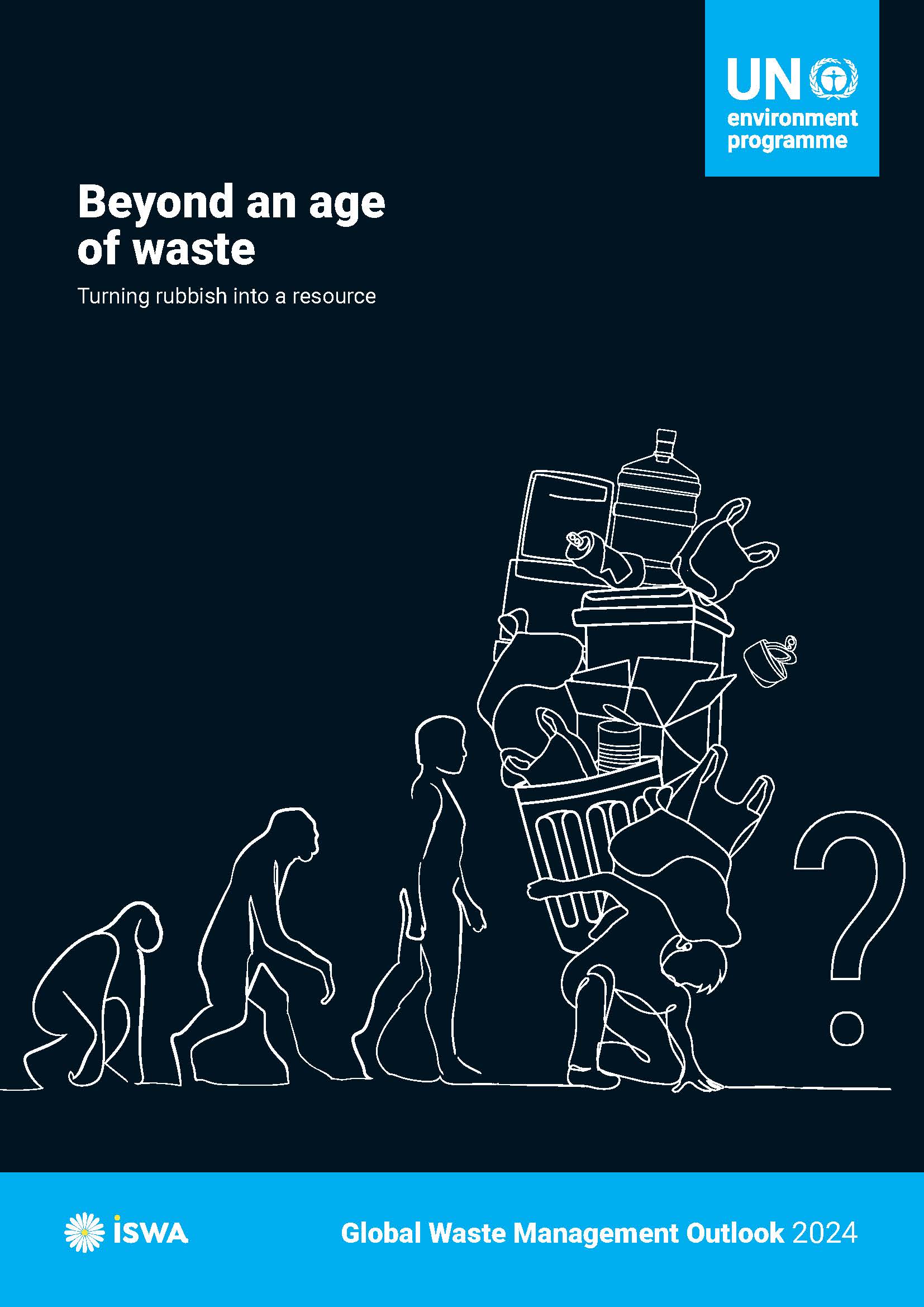
Executive Summary: Global Waste Management Outlook 2024
Executive summary: Jointly published with the United Nations Environment Programme (UNEP), the report provides an update on global waste generation and the cost of waste and its management since 2018.
Global Waste Management Outlook 2024
Jointly published with the United Nations Environment Programme (UNEP), the report provides an update on global waste generation and the cost of waste and its management since 2018. The analysis uses life cycle assessments to explore what the world could gain or lose through continuing business-as-usual, adopting halfway measures, or committing fully to zero waste and circular economy societies. The report also evaluates three potential scenarios of municipal waste generation and management, examining their impacts on society, the environment, and the global economy. Furthermore, it presents potential strategies for waste reduction and enhanced management, following the waste hierarchy, to treat all waste materials as valuable resources.
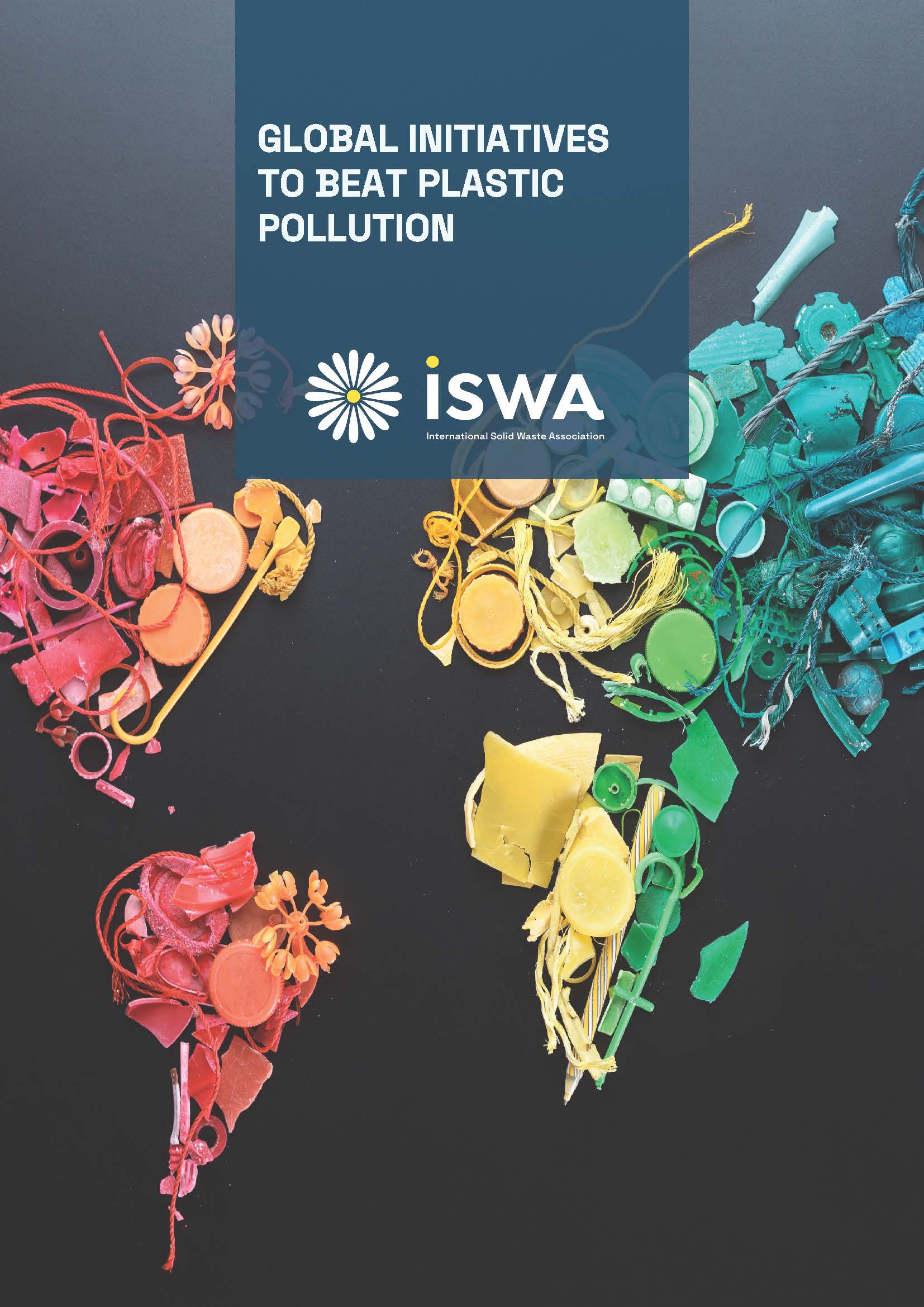
Global Initiatives to Beat Plastic Pollution
According to the Global Waste Management Outlook 2024, jointly launched by ISWA and UNEP, waste generation is growing at a fast pace and if the current trend is maintained, the amount of waste will almost double by 2050. Access to waste collection services varies significantly within and between regions and still, 38% of municipal solid waste ends in inadequate sites or is openly burned. Plastics are one of the most visible parts of it and plastic pollution is a global concern with significant environmental and economic impacts.
As a contribution to the fourth session of the Intergovernmental Negotiating Committee on Plastic Pollution, in Ottawa, Canada in April 2024, ISWA’s Plastic Treaty Task Force released this compilation of case studies showcasing diverse initiatives to address plastic waste management challenges across different regions.
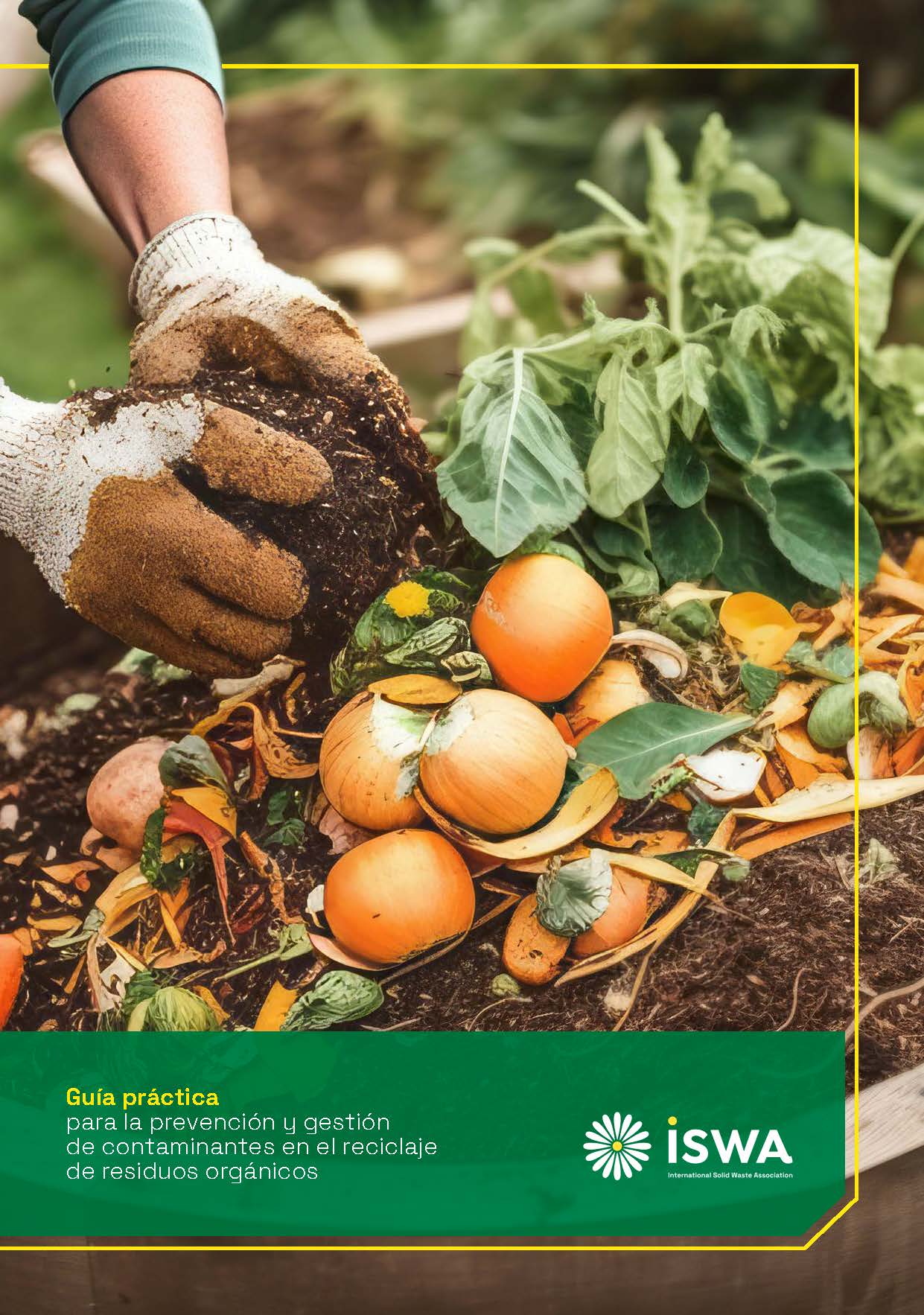
Guía práctica para la prevención y gestión de contaminantes en el reciclaje de residuos orgánicos
A Spanish translation of the 2023 released guide, produced by ISWA’s Working Group on Biological Treatment of Waste and intended to provide background information and case studies about the different types of contaminants that can enter organic waste streams intended for recycling, their potential impacts and the ways in which they can be prevented or removed.
2023
ISWA Publications and ISWA STC Reports launched in 2023
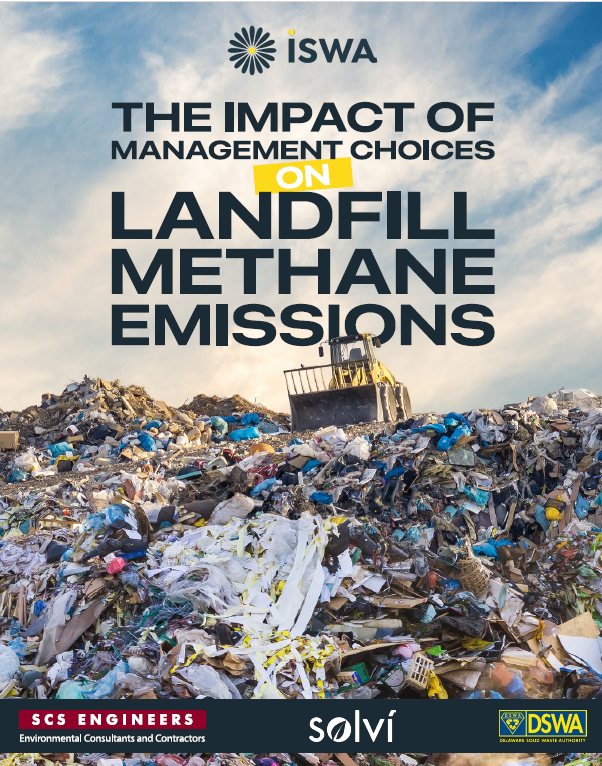
The Impact of Management Choices on Landfill Methane Emissions
ISWA’s Working Group on Landfill carried out a project to quantify the impact of different landfill
management choices on gas capture at landfills. The goal of this project is to compile factual arguments in
a white paper to illustrate and clarify, to both regulators and operators, which realistic management
choices during landfill operation provide the best options to minimize greenhouse gas (GHG) emissions
from landfills over their lifetime.
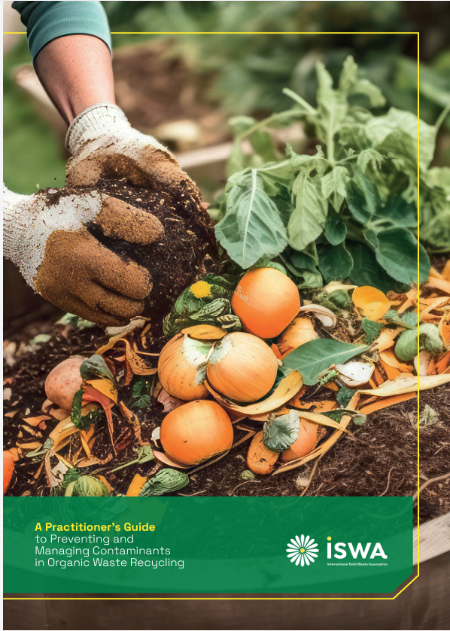
A Practitioner’s Guide to Preventing and Managing Contaminants in Organic Waste Recycling
ISWA’s Working Group on Biological Treatment of Waste produced this guide, intended to provide background information and case studies about the different types of contaminants that can enter organic waste streams intended for recycling, their potential impacts and the ways in which they can be prevented or removed.
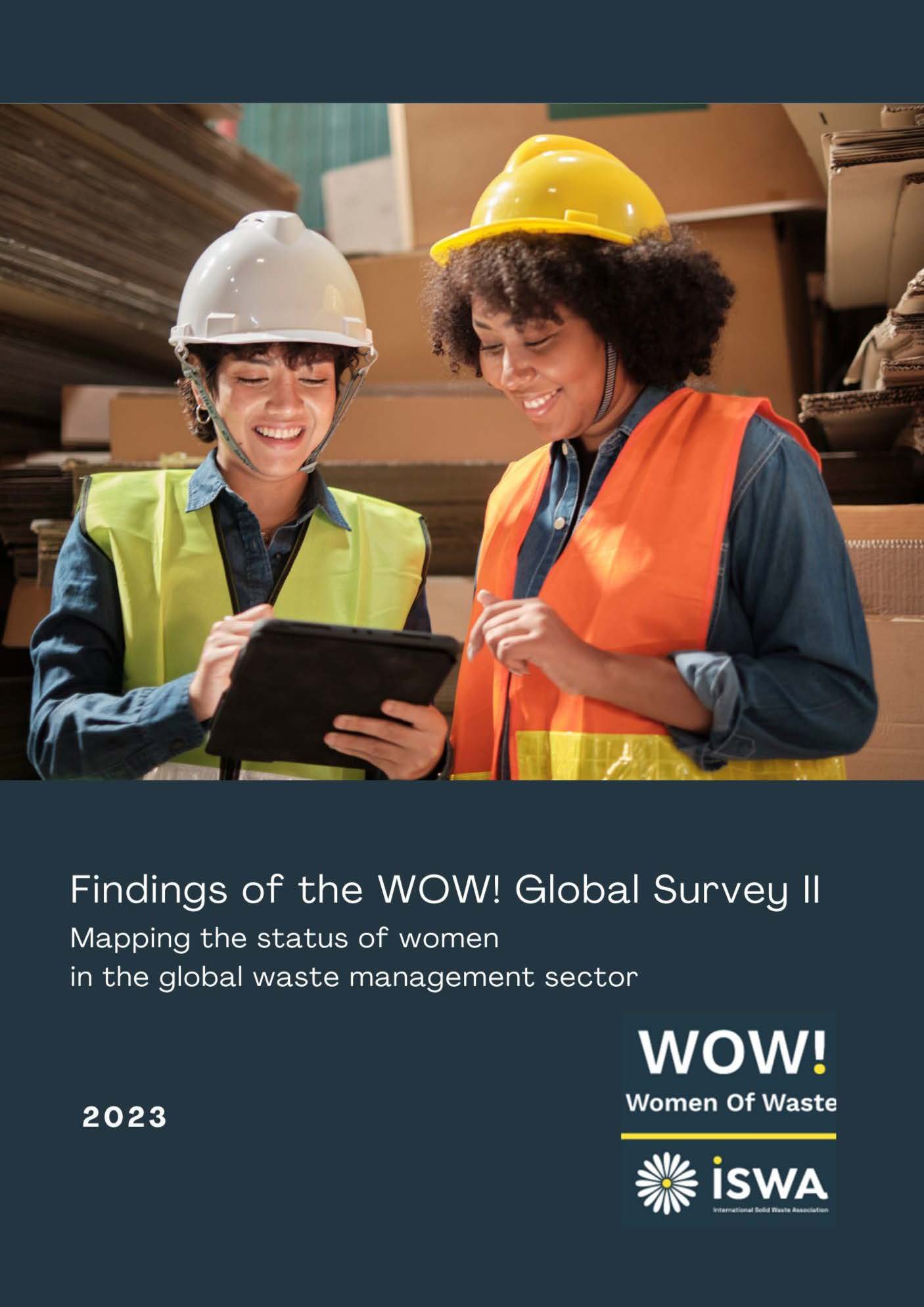
Findings of the WOW! Global Survey II
Through this first-of-its kind global mapping survey – now in its second edition – WOW! aims to help fill the data gap and build an evidence base to inform professionals in governments and private sector, as well as donors, policymakers, and associations in their efforts to support the advancement of women waste professionals.
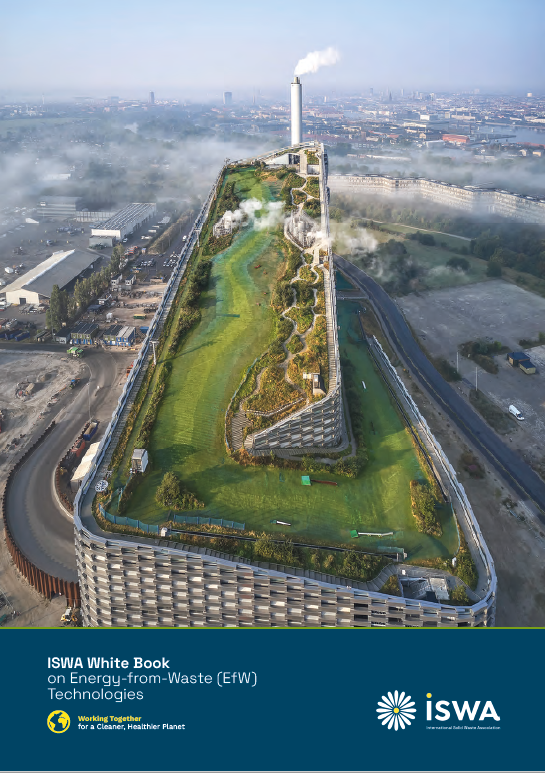
ISWA Whitebook on Energy from Waste (EfW) Technologies
ISWA’s Working Group on Energy Recovery launch a whitebook on Energy from Waste Technologies, intended to help decision-makers in charge of household waste management in terms of human health, environmental pollution, and climate change.
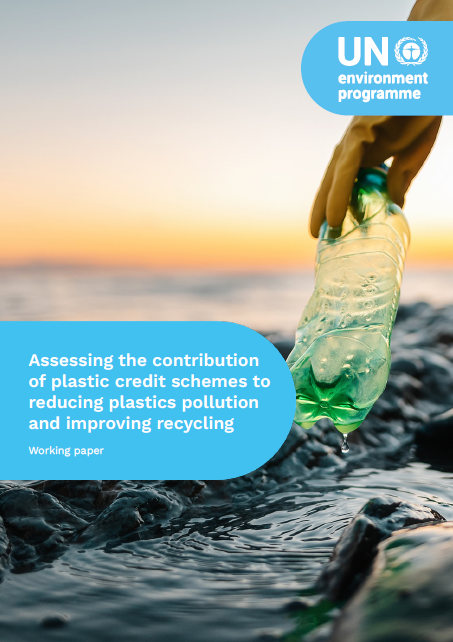
Assessing the Contribution of Plastic Credit Schemes to Reducing Plastics Pollution and Improving Recycling: Working Paper
A report launched on World Environment Day 2023 in collaboaration with the United Nations Environment Programme.
Key Elements to Beat Plastic Pollution: Towards a Legally Binding Instrument
A report launched on the margins of INC-2 in May 2023, Paris.
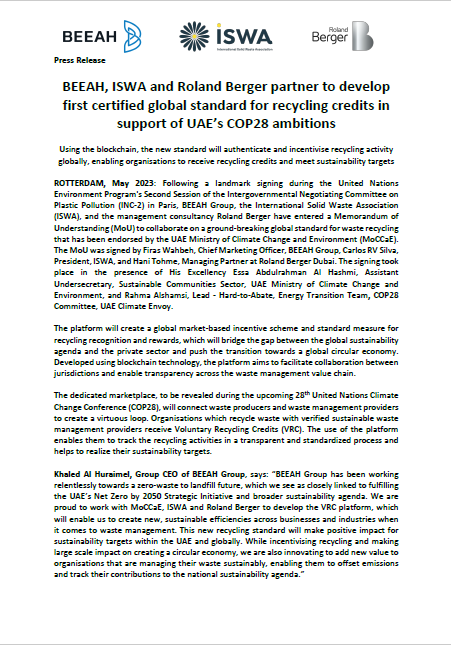
Press Release: BEEAH, ISWA and Roland Berger partner to develop first certified global standard for recycling credits in support of UAE’s COP28 ambitions
Following a landmark signing during the United Nations Environment Program’s Second Session of the Intergovernmental Negotiating Committee on Plastic Pollution (INC-2) in Paris, BEEAH Group, the International Solid Waste Association (ISWA), and the management consultancy Roland Berger have entered a Memorandum of Understanding (MoU) to collaborate on a ground-breaking global standard for waste recycling that has been endorsed by the UAE Ministry of Climate Change and Environment (MoCCaE).
2022
ISWA Publications and ISWA STC Reports launched in 2022
Research into Sustainable and Alternative Waste Collection Vehicle Usage
ISWA’s Working Group on Collection and Transport Technology present research into sustainable and alternative waste collection vehicle usage.
Released 22nd September 2022 in Singapore at the 2022 ISWA World Congress.
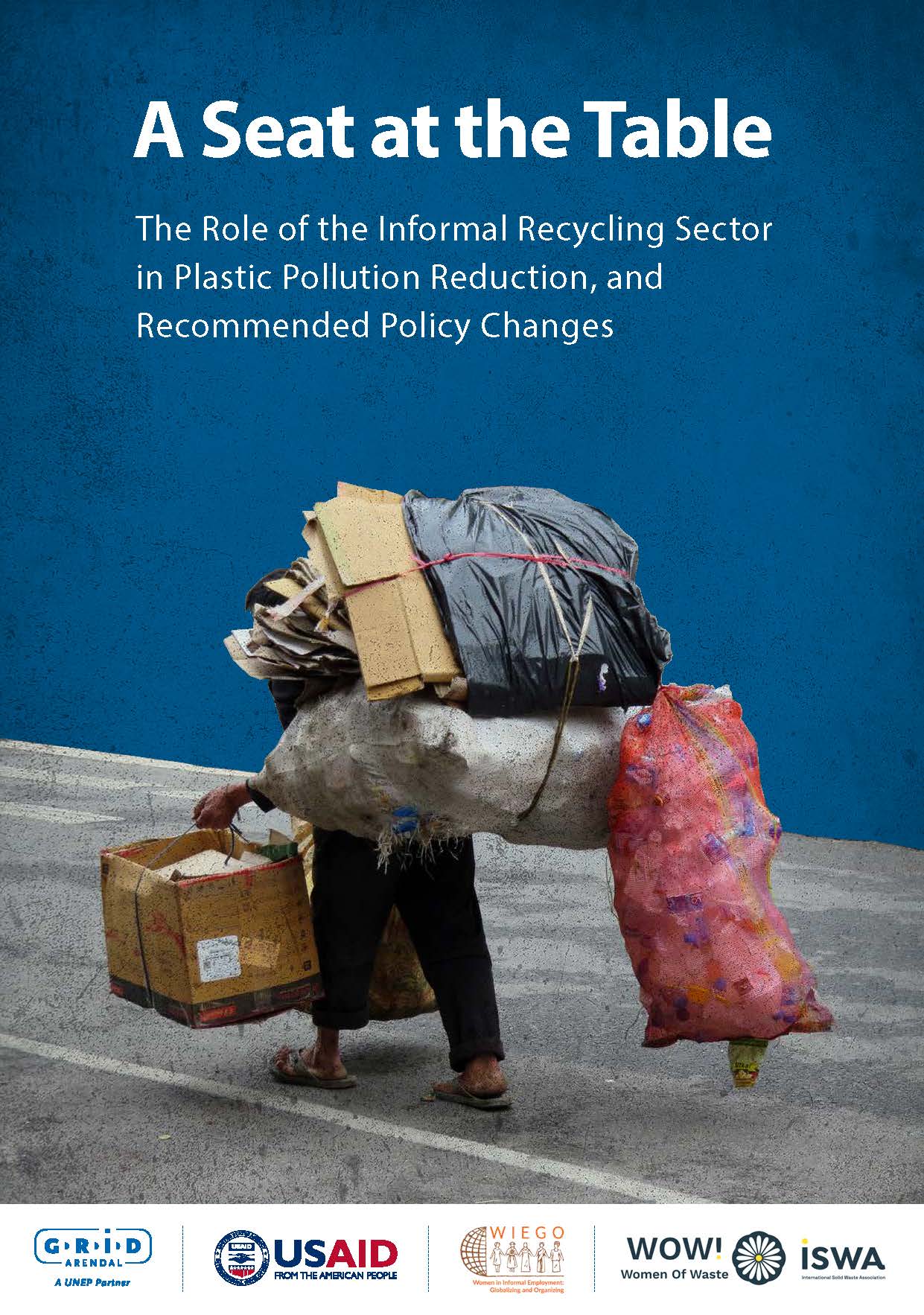
A Seat at the Table
ISWA’s Women of Waste (WOW!) Task Force contribute to a policy paper on the role of the informal recycling sector in plastic pollution reduction, and recommended policy changes.
Released 22nd September 2022 in Singapore at the 2022 ISWA World Congress.
Disclaimer
The ISWA WOW! Task Force has participated in the preparation of this document and endorses ONLY the gender considerations of the informal
recycling sector that is needed in the context of the current waste crisis in some places of the world. Any views expressed in this document do not necessarily reflect the views and position of ISWA bodies or ISWA members.
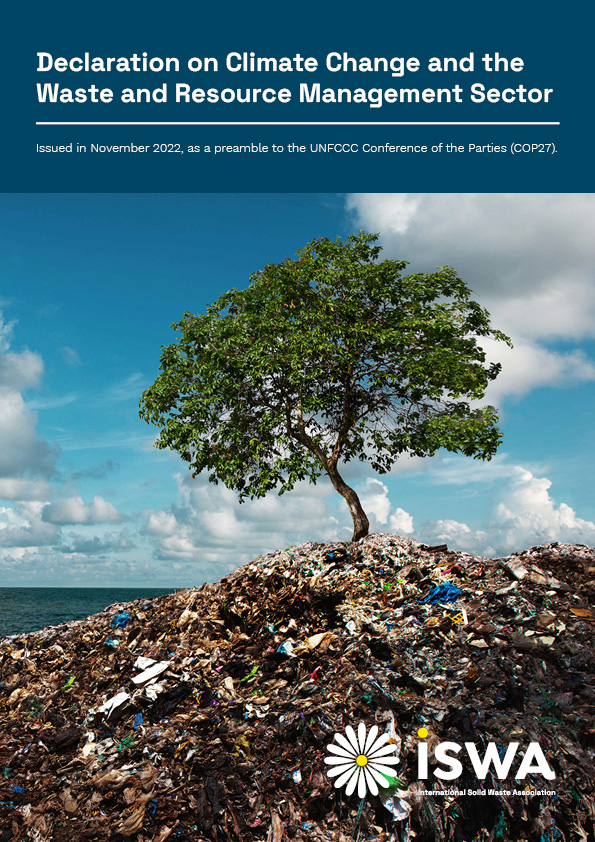
ISWA's Updated Declaration on Climate Change and the Waste Management Sector
ISWA issued an updated Declaration on Climate Change and the Waste Management Sector as a contribution to the UNFCCC Conference of the Parties (COP27) held in Sharm el Shaikh, Egypt, in November 2022.
ISWA's Key Messages for the Intergovernmental Negotiating Committee (INC-1)
Following ISWA’s position paper on Plastics Pollution, issued as a contribution to UNEA 5.2 in February 2022, ISWA has prepared key messages for the meeting, but will also follow up and engage in the discussion throughout the whole negotiation process until the end of 2024.
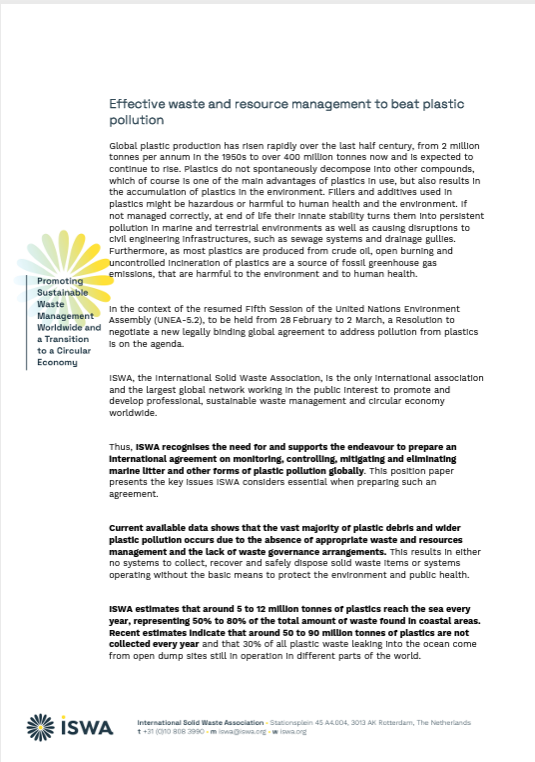
ISWA's Position Paper on Plastics Pollution, presented at UNEA 5.2 in February 2022.
ISWA called upon Member States at UNEA 5.2 to include key considerations in the future Resolution about Plastic Pollution, with the stance that the Waste and Resource Management industry has an integral role in mitigating plastics entering the oceans.
ISWA's Position Paper on Plastics Pollution (Spanish)
ISWA’s Position Paper on Plastics Pollution, presented at UNEA 5.2 in February 2022. Translated in Spanish.
2021
ISWA Publications and ISWA STC Reports launched in 2021
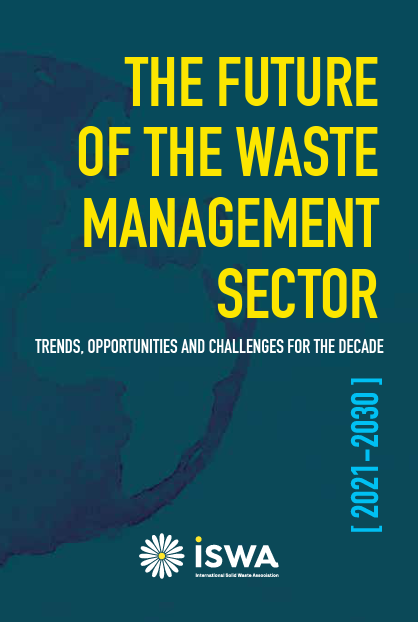
The Future of the Waste Management Sector
ISWA’s report on the outlook for the decade ahead in the waste management industry.
Launched in October 2021, at the 2021 ISWA World Congress in Athens, Greece.
The Future of the Waste Management Sector (Spanish)
ISWA’s report on the outlook for the decade ahead in the waste management industry. Translated in Spanish.
Original report launched in October 2021, at the 2021 ISWA World Congress in Athens, Greece.
The Future of the Waste Management Sector (Portuguese)
ISWA’s report on the outlook for the decade ahead in the waste management industry. Translated in Portuguese.
Original report launched in October 2021, at the 2021 ISWA World Congress in Athens, Greece.
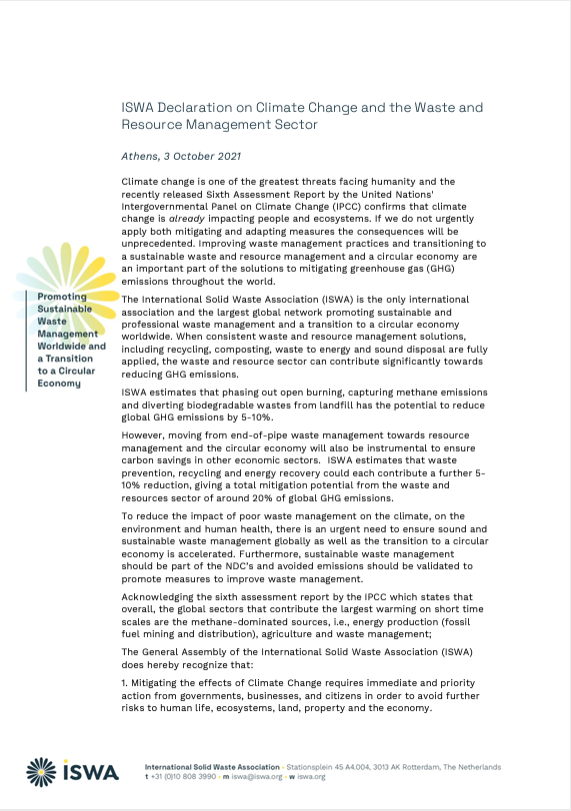
ISWA's Declaration on Climate Change and the Waste Management Sector (2021)
The International Solid Waste Association, on behalf of its members and on the occasion of the ISWA General Assembly 2021, issued a Declaration on Climate Change and the Waste Resource Management Sector. The declaration highlights the substantial Impact that the waste management sector can have towards achieving a greener, more sustainable planet and the practical measures needed to get there.